Science and Technology Museum LED indoor spherical screen design and value embodiment
Value Embodiment of LED Spherical Screen Design in Science Museums
As a core venue for scientific popularization and innovative display, science museums are witnessing LED spherical screens reshape immersive experiences through groundbreaking spatial visual forms. This fusion of digital technology and artistic expression not only meets technical demands for high-precision display but also fulfills the mission of knowledge dissemination and contextualized storytelling. This article analyzes the deep connotations of this innovative medium from design logic, technological implementation, and value dimensions.
I. Design Philosophy: Spatial Storytelling Beyond Planar Boundaries
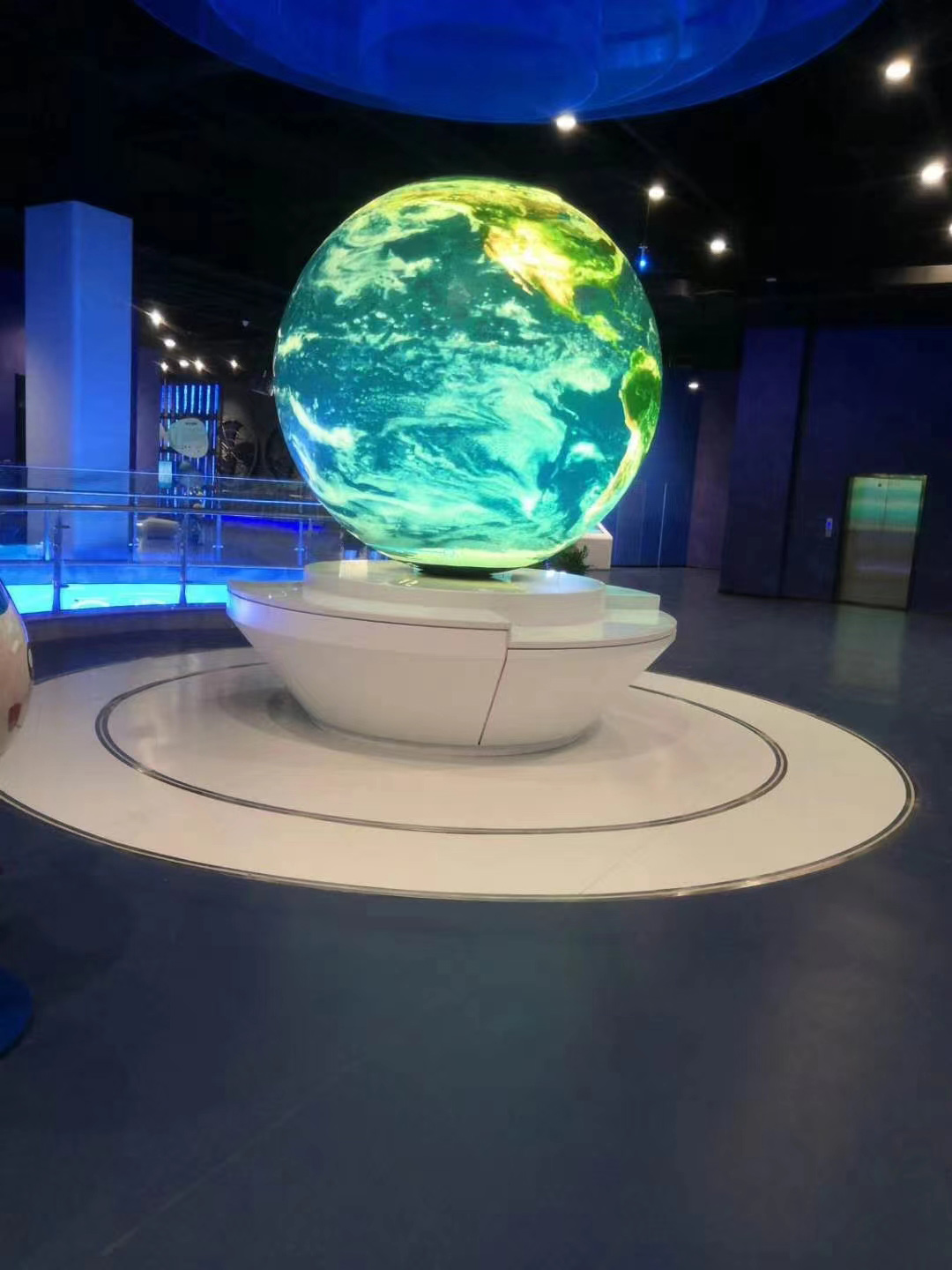
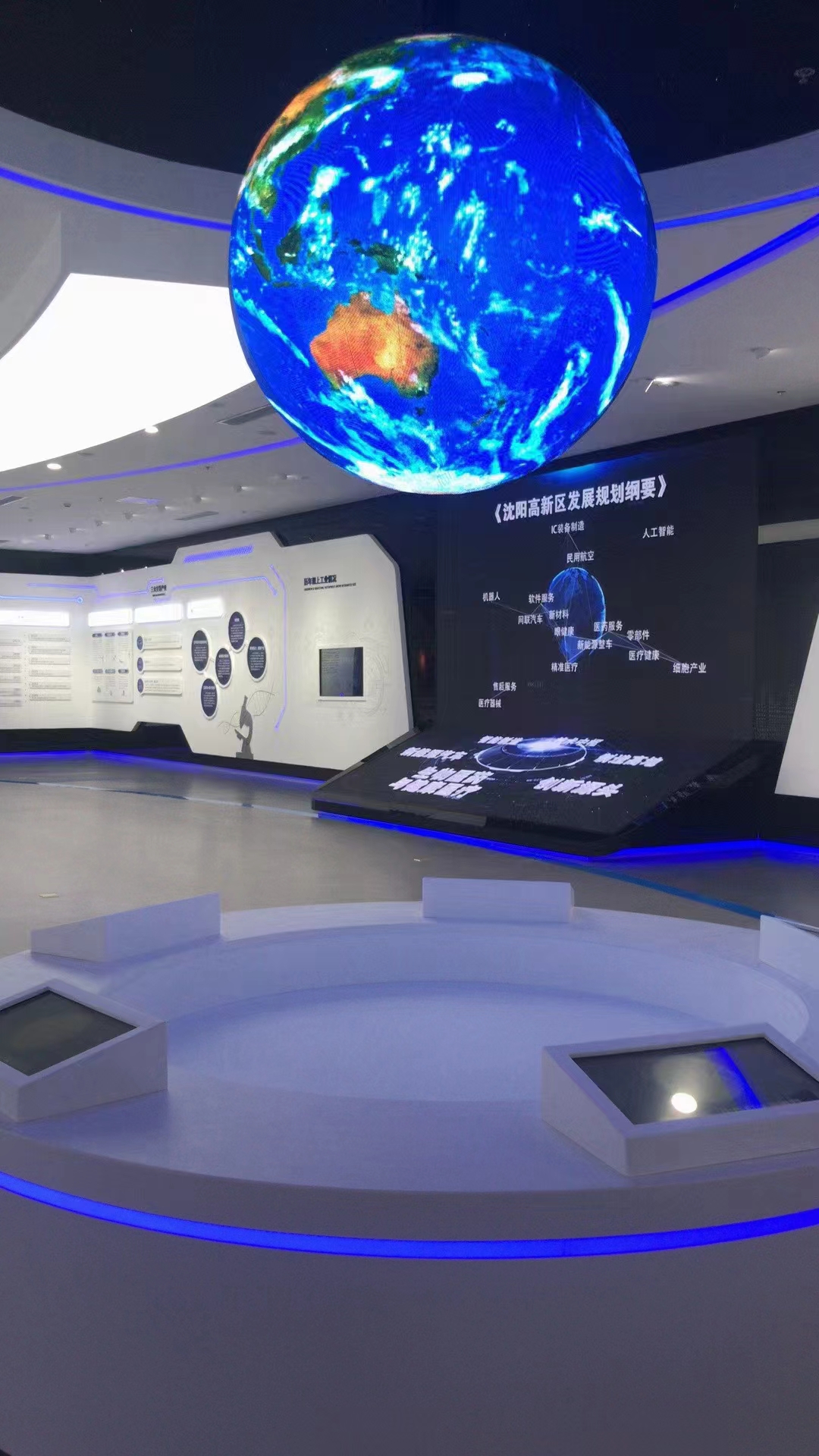
Traditional flat screens constrained by two-dimensional frameworks struggle to achieve three-dimensional content expression. LED spherical screens extend visual information from planes to three-dimensional space through 360° enveloping structures, creating a unique "dome effect." The design core lies in constructing a "dead-angle-free" viewing experience: designers adopt double-layer honeycomb module layouts, optimizing pixel density distribution through spherical curvature algorithms to ensure image integrity from any perspective. A 12-meter diameter project in Shanghai's science museum exemplifies this, where 12,000 adjustable modules achieve 98% surface brightness uniformity through dynamic calibration, successfully demonstrating spacecraft trajectories and molecular structure simulations.
The synchronized development of spherical coordinate content rendering engines allows standard video streams to be converted into spherical projection data in real-time. This innovation enables regular video materials to adapt to spherical screens without specialized reproduction, significantly reducing content production thresholds. Coupled with a 32-channel spatial audio system inside the sphere, dynamic lighting and sound create multidimensional sensory synergy, immersing audiences in virtual scenarios like solar system orbits or deep-sea ecosystems.
II. Technological Breakthroughs: Integration of Precision Engineering and Intelligent Control
To achieve stable spherical structures, engineering teams developed carbon fiber-aluminum alloy composite frame systems. Maintaining bearing capacity under 15kg/m², these structures achieve physical stability with wind resistance up to level 9. The display system employs Micro LED chips with autonomous cooling technology, reducing pixel pitch to 1.2mm while reaching 5000nit peak brightness and HDR10+ dynamic range, ensuring color accuracy even under strong ambient light.
The intelligent control system integrates IoT and AI algorithms, realizing three innovative functions: environmental sensing modules automatically adjust content rhythm based on visitor density; gesture recognition supports multi-user interaction for manipulating nebula evolution or geological structure demonstrations; machine learning optimizes contentthrough audience dwell time analysis. Data from Beijing's science museum shows 47% prolonged average visit duration and 32% increased knowledge retention after implementing smart spherical screens.
III. Value Dimensions: Constructing New Paradigms for Science Communication
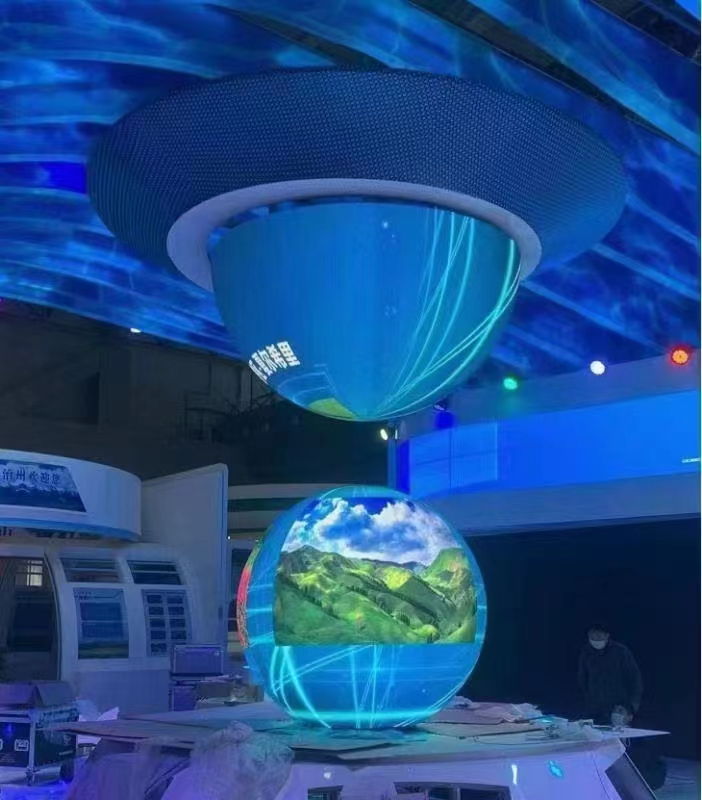
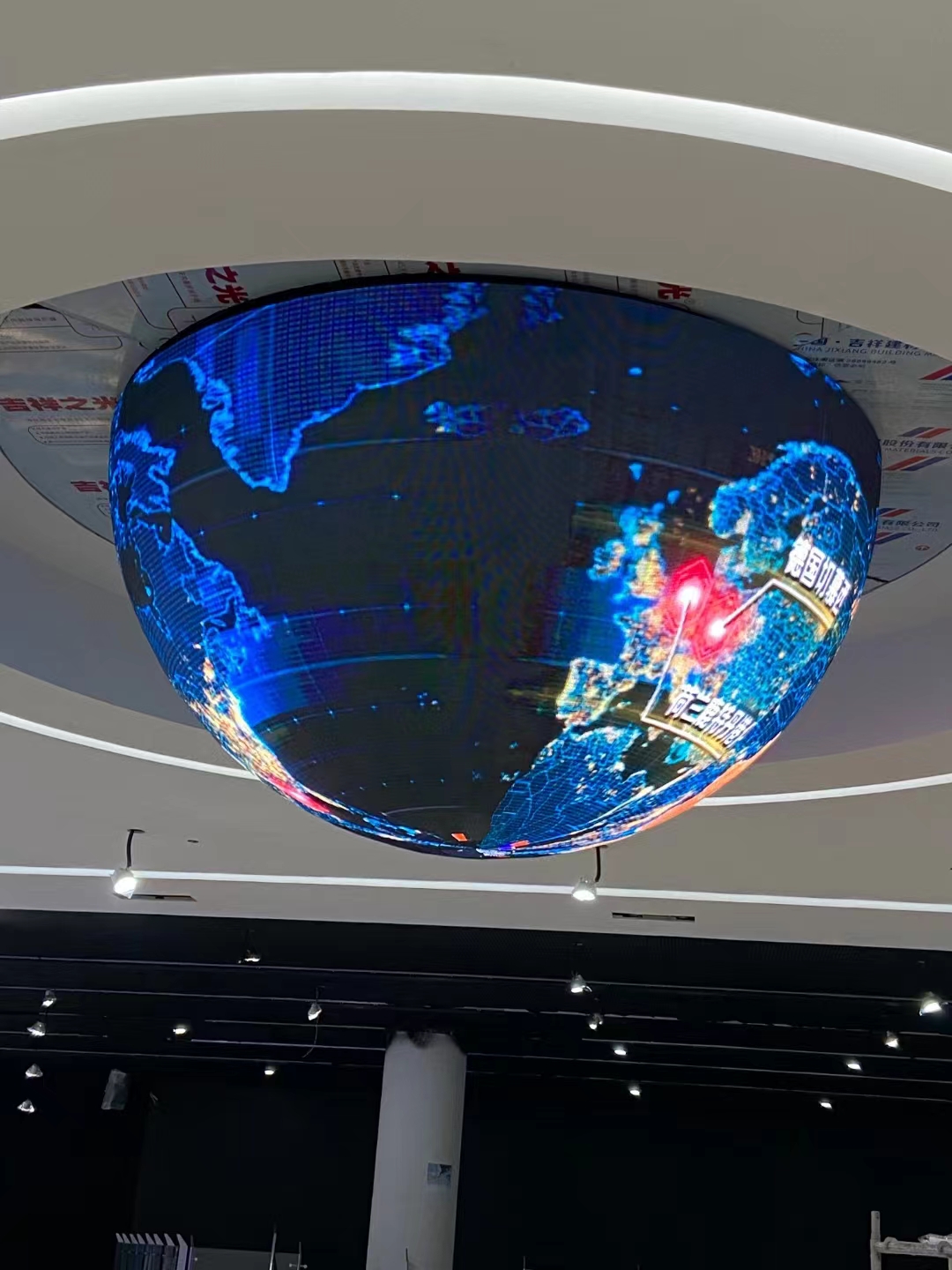
From communication efficacy perspective, spherical screens create triple value leaps: Firstly, their revolutionary spatial presentation activates audiences' multisensory cognitive channels, transforming abstract scientific principles into perceptible dynamic models. Quantum entanglement demonstrations through dual-sphere visualize probability cloud distributions in microscopic worlds. Secondly, as open interactive platforms, real-time data integration displays remote sensing images from space stations or dynamic seismic monitoring data, transforming museums into bridges connecting cutting-edge research and public understanding.
Most significantly, this innovative medium reshapes science museums' narrative language. The traditional unidirectional knowledge transmission evolves into participatory learning through active exploration. Guangzhou's "Earth Pulse" project exemplifies this, where spherical screens present global climate data streams, allowing visitors to retrieve regional environmental parameters through touch interfaces, fostering deep understanding of carbon neutrality through embodied experiences. This "experience-cognition-reflection" progressive learning path epitomizes the essential of science museums' educational value.
 English
 中文
中文