The Evolution of LED Screen Design in Science and Technology Museums
The Evolution of LED Screen Design in Science and Technology Museums: From Flat to "Hyperdimensional"—A Revolution in Scientific Narratives
When visitors step into the Shanghai Planetarium's dome theater and gaze up at the 30-meter-diameter LED dome; when children wander through the Beijing Science Center's "Cell Tunnel" and touch the dancing DNA strands on the curved screen—LED screens are redefining the boundaries of science and technology museums. In the era of immersive experiences, the screen's form itself has become part of the scientific narrative.
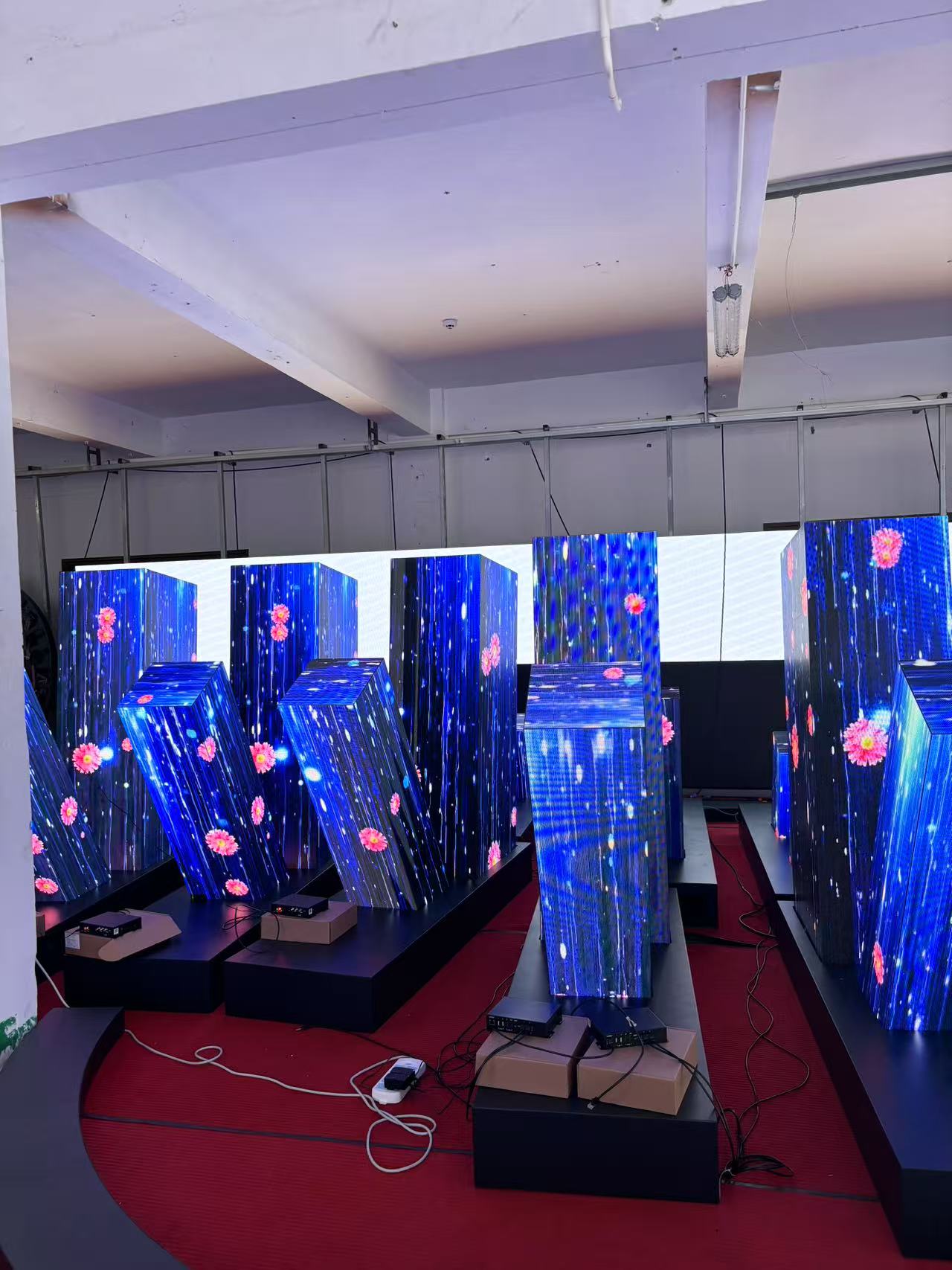
Breaking Beyond the Flat: Three Evolutionary Directions of LED Design in Science and Technology Museums
Spatial Integration: The "Invisible Magic" of Dissolving Screen Boundaries
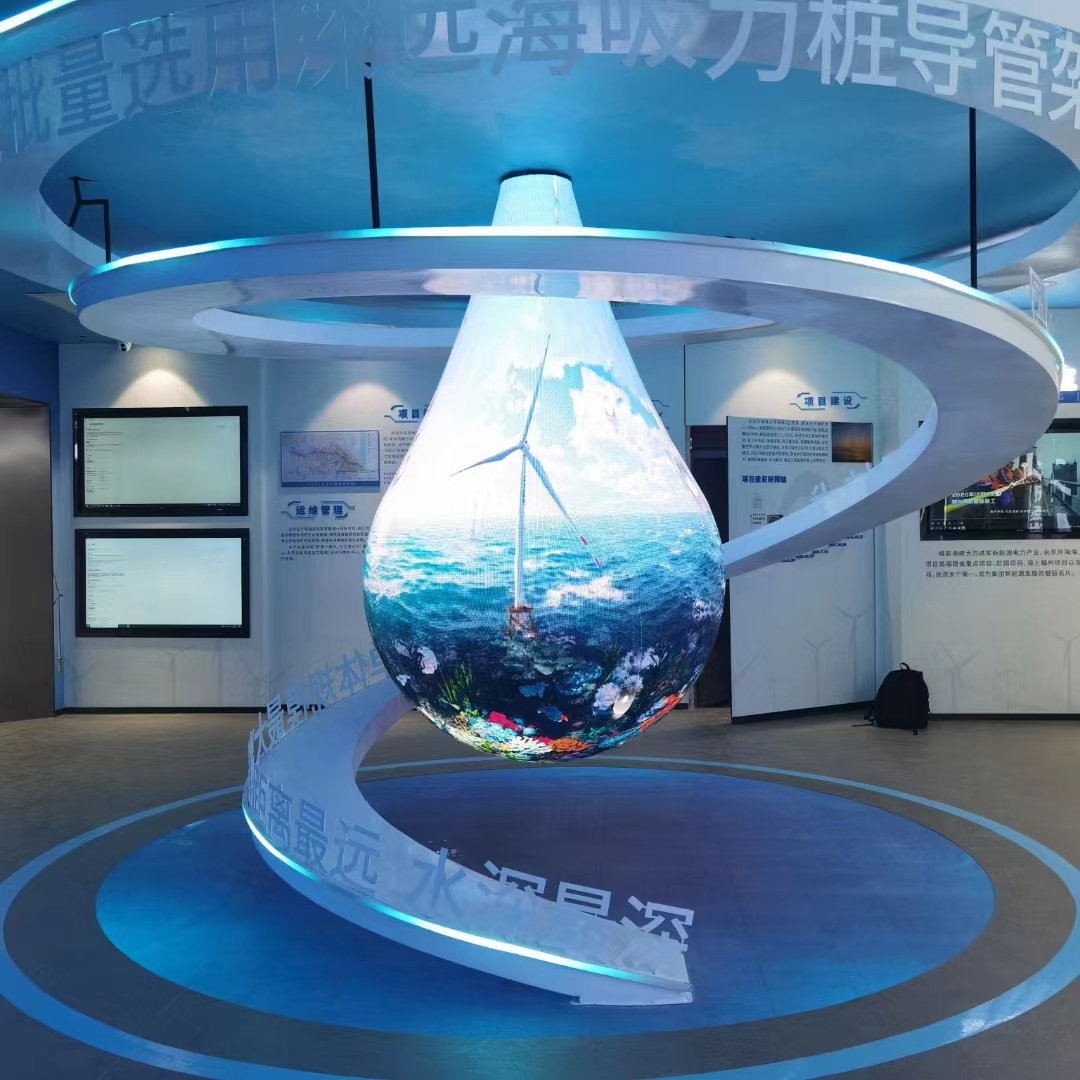
Curved Surface Revolution: From a shallow 30° arc to a 360° panoramic surround, curved screens break the traditional constraints of right angles. The Guangdong Science Center's "Deep Sea Exploration" exhibition hall features a 150° inward-curved screen, combined with surround sound, giving visitors the feeling of being enveloped in a submersible. Engineer Chen, the project leader, revealed, "The arc radius must be precisely calculated to ensure zero image distortion at a viewing distance of 3 meters."
Curved Inlay: LED modules are embedded into unusual architectural structures. In the new Shenzhen Science and Technology Museum, a 200-square-meter wavy screen seamlessly blends with the curved concrete surface, simulating the dynamic effect of a "wave of technology," with joint tolerances controlled to within 0.1mm.
Fusion of Heaven and Earth: A combination of ground-level LEDs and facade screens expands the vertical dimension. The "Cosmic Particles" exhibit at the China Science and Technology Museum utilizes a 40° tilted floor screen linked to a dome screen, triggering particle collision animations as visitors walk, creating a fully immersive experience.
Thematic Symbolism: A scientific metaphor in which form reflects content.
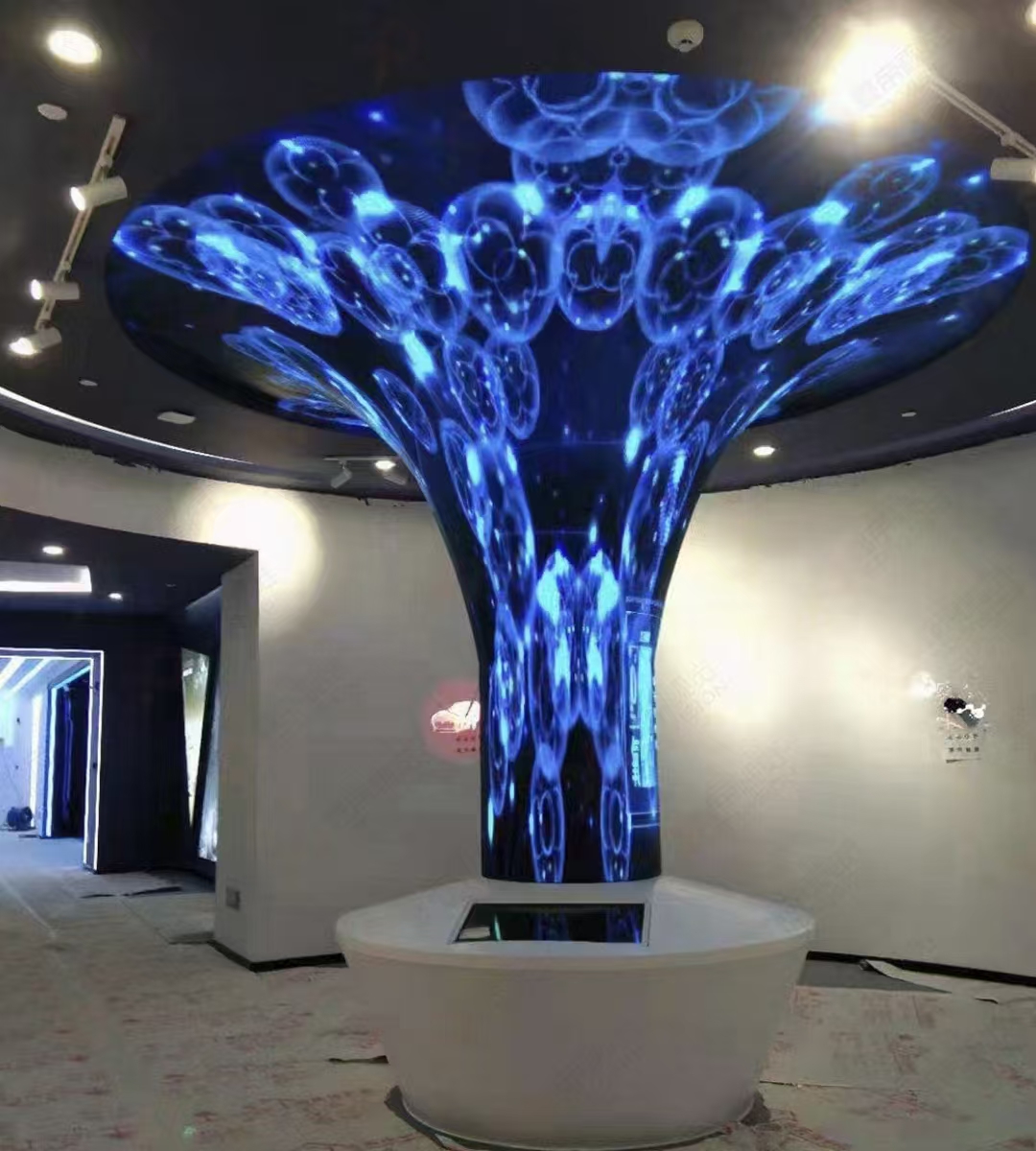
Bionic Structure: The "Tree of Life" LED installation at the Chongqing Natural History Museum uses branch-like screens to illustrate the evolution of organisms. The branches are constructed from P2.5 flexible screens, while the leaves are P1.8 transparent screens, creating a sense of transparency and layering.
Geometric Deconstruction: The Hefei Science and Technology Museum translates quantum theory into visual language. The hexagonal honeycomb spliced screens symbolize quantum lattice structures, with 5cm luminous gaps between modules simulating "quantum tunneling."
Mechanical Dynamics: In the "Gear World" at the Suzhou Youth Science Center, 12 triangular LED screens form a rotatable gear set, integrating mechanical structure and digital content in real time to illustrate the principles of energy conversion.
Interactive Carrier: A revolutionary experience that reshapes the human-machine relationship.
Responsive Surface: The Nanjing Science and Technology Museum's "Smart City" sandbox features a stepped LED curtain wall, allowing visitors to "lift" the building's facade with gestures, revealing operational data from the infrastructure within.
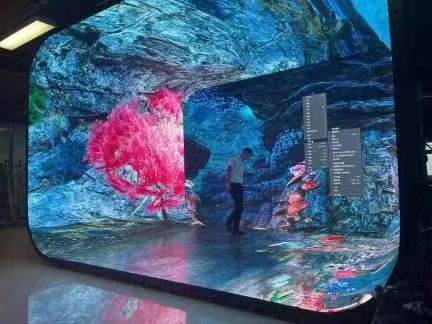
Topological Deformation: The Hangzhou Low-Carbon Science and Technology Museum uses programmable magnetic LED modules, allowing visitors to assemble a carbon neutrality path model, with the screen displaying real-time carbon emissions changes.
Transparent Interaction: The latest transparent screen (transmittance >65%) enables "remote control." The Wuhan Science and Technology Museum's gene sequence screen allows visitors to tap virtual bases through the screen to trigger a pairing animation, solving the problem of reflective screens on traditional touchscreens.
The Hardcore Technology Behind the Design: Five Key Supports for Creative Realization.
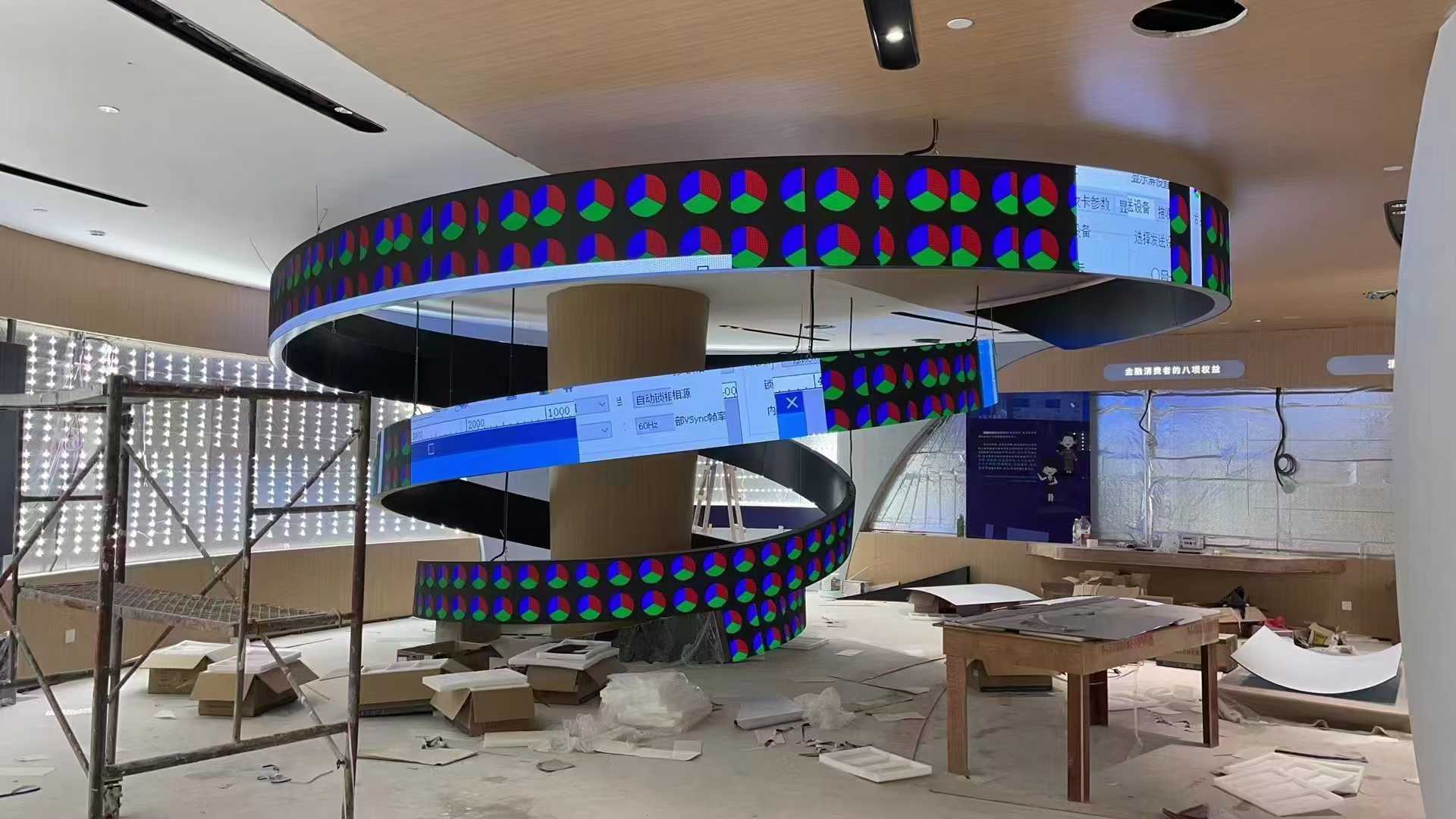
Flexible Splicing Technology: An ultra-thin flexible substrate (<3mm thick) combined with a magnetic quick-release mechanism allows the screen to bend to a radius of 500mm. A manufacturer in Chengdu customized a spiral DNA screen for a science and technology museum, achieving a bending accuracy of 0.5° per module.
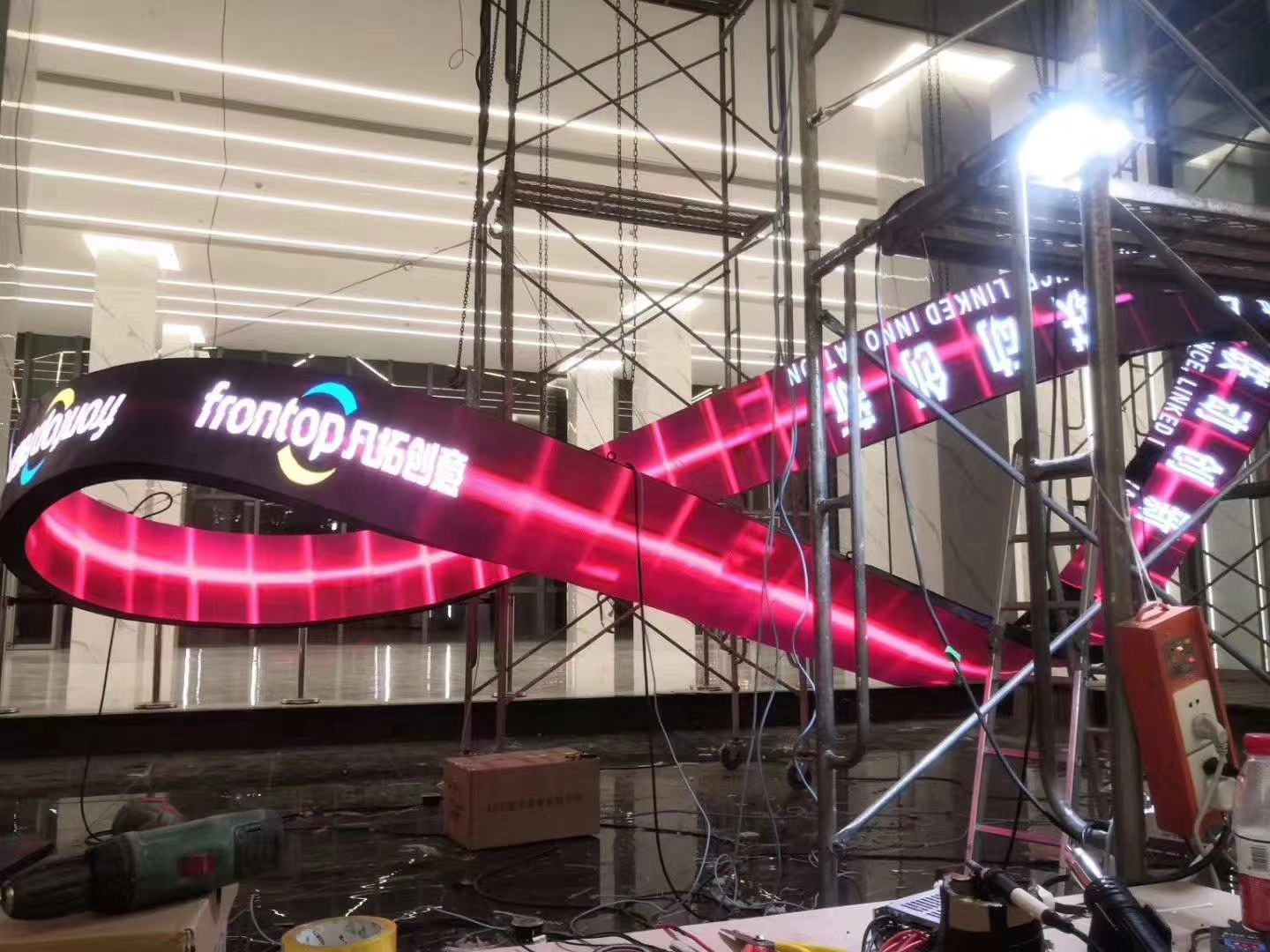
Profile Correction System
Adaptive point-to-point geometric correction technology handles complex curved surfaces, such as spheres and angles. A dome project in Shanghai utilizes 4096 correction points to ensure seamless panoramic image integration.
Lightweight Structural Revolution
A carbon fiber enclosure (weight <8kg/m2) combined with aluminum honeycomb composite panels reduces the load-bearing capacity of cantilevered structures by 40%. The 10-meter cantilevered screen at the Beijing Science Center exhibits an amplitude of <2mm at wind speed level 8.
Front-View Maintenance Innovation
A rotating clip + guide rail design enables front-view maintenance of complex screen designs. Repair efficiency for a wave screen at a science and technology museum has increased by three times, with single module replacement taking less than 5 minutes.
Cross-System Linkage
DMX512 protocol enables millisecond-level synchronization of screen shape with mechanical devices, lighting, and sound effects. A dynamic screen in Guangzhou achieves a response delay of <0.1 second.
A New Paradigm for Science Communication: How Can Shaped Screens Reshape Museum Education?
A Revolution in Spatial Cognition
The dome theater offers stunning visualizations of astronomical scales. The three-dimensional presentation of lunar craters on the dome screen improves audience understanding of the distance between the Earth and the Moon by 47% (according to a China Science and Technology Museum evaluation).
Multi-sensory Knowledge Penetration
The 270-degree surround screen in the "Cell Tunnel" combined with a vibrating floor increased junior high school students' retention rate of mitosis knowledge to 82%, far exceeding the 35% achieved with flat-panel displays.
Exploratory Learning Path
The reconfigurable LED module wall inspires independent exploration. Tests at the Shanghai Science and Technology Museum show that visitors spend 9.7 minutes in front of the interactive display, six times longer than those viewing panels.
The Future Has Arrived: A Look Ahead at the Next Generation of Science and Technology Museum Shaped Screens
Intelligent Transformable Materials: Shape Memory Alloy Frames + Stretchable LEDs Enable Automatic Reconfiguration of Exhibits
Holographic Levitational Imaging: Nanoscale LED Arrays Generate Interactive Aerial Holograms
Brainwave-Response Interface: Screen Shape Dynamically Changes with Visitor Attention
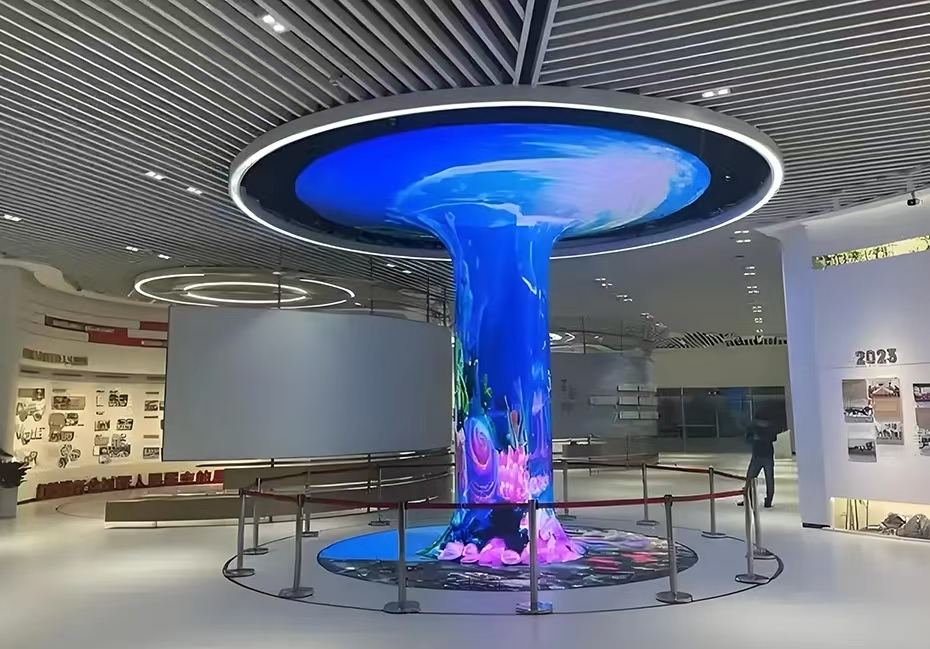
Ecological Symbiosis System: Bio-LED Screens Combined with Vertical Greening
"The best science and technology museum exhibits make visitors forget the existence of technology," emphasized Wang Min, Chief Designer of the Beijing Science Center. "When LED design and scientific content achieve atomic-level fusion, the screen itself becomes a wormhole to an unknown world."
According to the latest revised draft of the "Standards for the Construction of Science and Technology Museums," starting in 2025, new venues must have a minimum of 30% of custom-shaped screens. In this revolution in scientific narrative, shape is not merely a formal innovation; it redefines the dimensions of human perception. As children run across a glowing globe screen, measuring the circumference of the equator with their feet, the seeds of science have already taken root in this spatialized experience.
 English
 中文
中文