Outdoor naked eye 3D display, the perfect collision of technology and art!
. Analysis of naked-eye 3D display technology architecture
1. Breakthrough in optical imaging principle
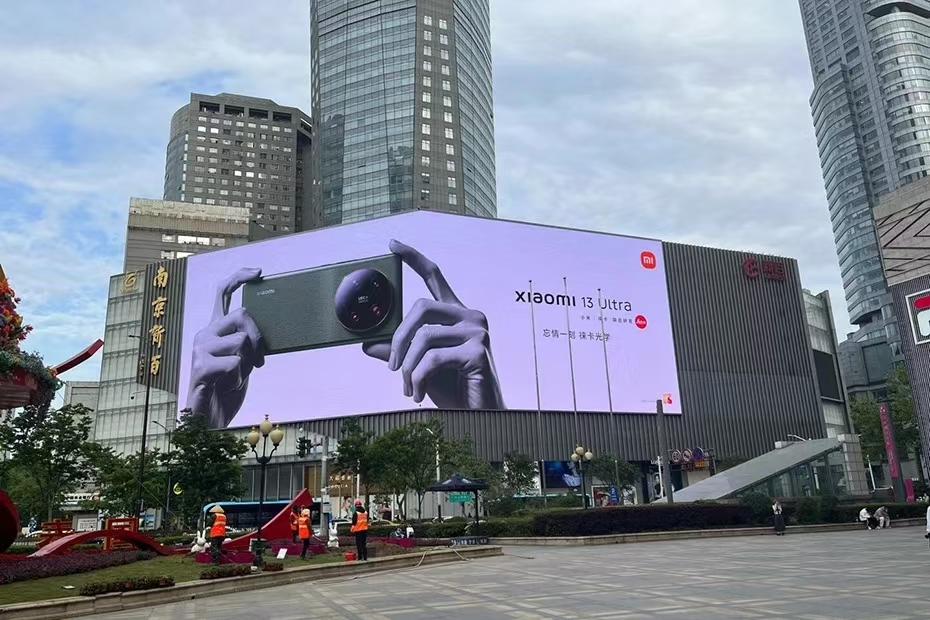
Parallax barrier technology: Pixel-level light control is achieved through a precision lenticular lens array (Lenticular Lens), forming 32 independent viewpoints within a distance of 5-50 meters, with a viewing angle coverage of up to 160°.
Real-time rendering engine: Using UE5+ ray tracing algorithm, 120,000 light paths are generated per frame to ensure that the depth of field error is ≤0.03mm.
Ambient light adaptation: 200,000:1 dynamic contrast adjustment, combined with 2000-5000nits brightness automatic compensation, to solve the image attenuation problem under direct sunlight.
2. Core hardware parameter matrix
Parameter category Technical standard Typical configuration scheme
Pixel density Dot pitch P2.5-P4.0 3840×[email protected] (8K level)
Refresh rate ≥7680Hz 12bit color depth + 384Hz drive
Surface accuracy Curvature error ≤0.5°/m Radius 15m spherical screen
Protection level IP66 waterproof + 5-level wind pressure resistance 2000W/m² cooling system
3. System stability design
Power redundancy: N+1 parallel power supply module, support millisecond-level fault switching
Pixel compensation: When the bad pixel rate is ≤0.0001%, the AI algorithm automatically repairs the integrity of the picture
Temperature control strategy: In an environment of -30℃ to 60℃, the module temperature difference is maintained at ≤3℃ through liquid cooling pipes
II. Strategy for the integration of artistic creativity and spatial narrative
1. Scenario-based content design rules
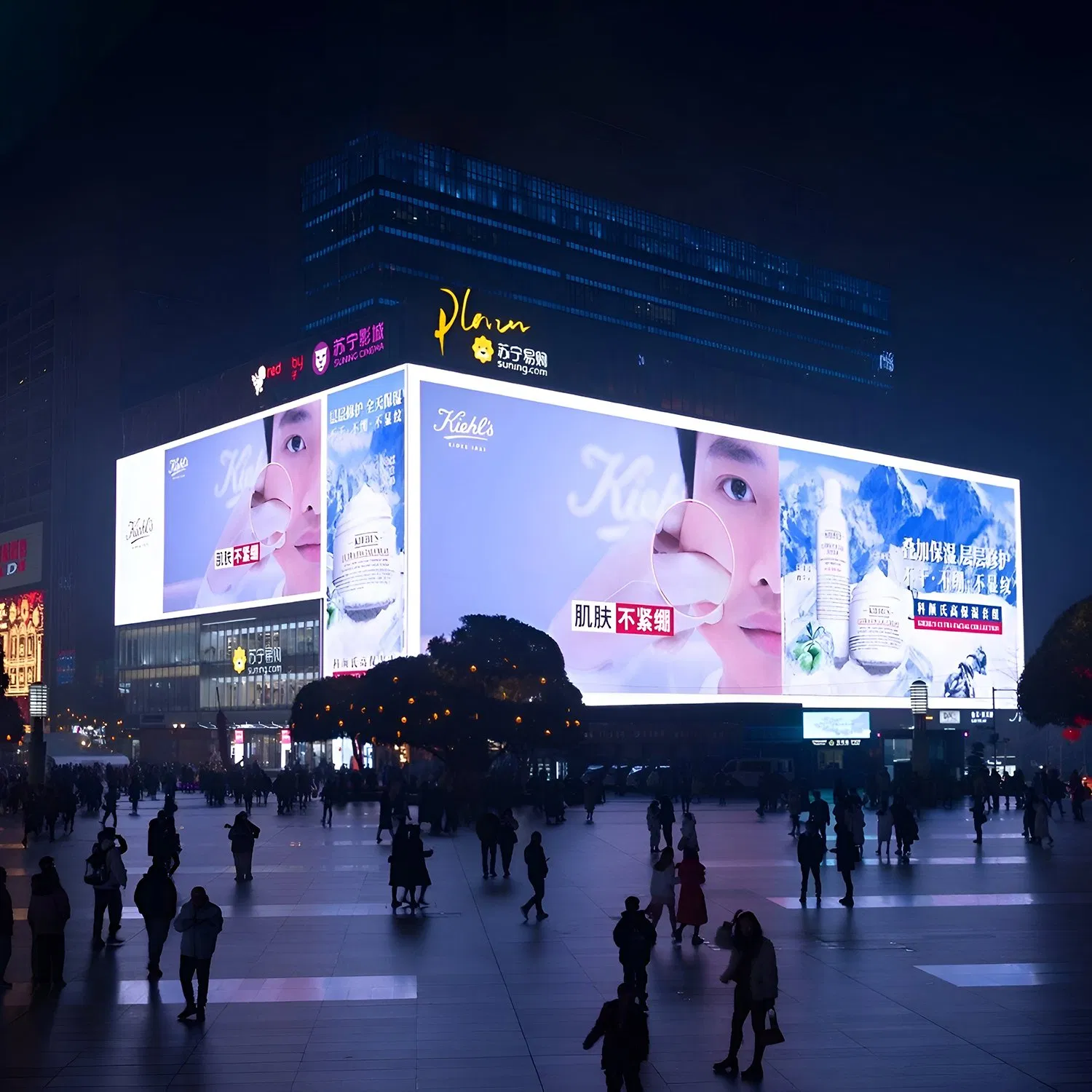
Spatial resonance: screen form and building facade co-construction (such as wave screen matching streamlined commercial buildings)
Time dimension: content strategy for morning/noon/evening time periods (dynamic art installations in the morning, brand main visuals at night)
Interactive revolution:
Body sensory interaction: millimeter wave radar captures human movements within 200㎡ (response delay ≤8ms)
AR overlay: trigger mobile phone extension content through LBS (opening rate increased by 47%)
Data visualization: real-time presentation of data flows such as business district customer flow/brand popularity
2. Creative production tool chain
3D modeling: Blender+Maya builds high-precision models (recommended number of faces ≥5 million)
Dynamic binding: Houdini produces physical simulation special effects (cloth/fluid/particle system)
Cross-screen adaptation: Notch Designer converts horizontal and vertical screen/curved screen content formats with one click
Real-time rendering: Unity engine supports 4K@120fps output (requires dual RTX 6000 graphics cards)
3. Revelation of the hot-selling cases
SONY flagship store in Ginza, Tokyo:
250㎡ diamond-shaped curved screen, playing the cyber mecha that "breaks through the wall"
Effect indicators: 290% increase in dwell time, 200 million times of social media dissemination
Dubai Mall water screen:
Water flow medium + 3D projection, creating an aerial ocean world
Business conversion: 65% increase in customer flow in surrounding stores
III. Operational methodology for efficient advertising communication
1. Precision delivery model
Dimension Data collection method Optimization strategy
Traffic flow Thermal sensing camera Premium delivery during peak hours
Audience portrait WiFi probe + face analysis Targeted push of content by gender/age
Interactive behavior Gesture recognition statistics Weighted exposure of highly interactive content
Environmental parameters Weather station linkage Switch to high contrast mode on rainy days
2. Effect evaluation index system
Basic indicators: exposure frequency, dwell time, interaction rate
In-depth indicators:
Brand memory (TURF test score)
Emotional resonance index (AI micro-expression analysis)
Offline traffic diversion efficiency (Bluetooth beacon tracking)
ROI calculation model:
Copy
Cost per thousand exposures CPM = (total monthly cost × 0.6) / exposure × 1000
Case: After a luxury brand launched 3D advertising, CPM dropped to 58% of traditional large screens, and store conversion rate increased by 22%
3. Long-term operation and maintenance mechanism
Preventive maintenance:
Daily automatic calibration of color consistency (ΔE<1.5)
Weekly structural stress detection (deformation alarm threshold 0.3mm/m)
Content preservation plan:
Establish a graded material library (30% permanent content + 50% seasonal content + 20% hot content)
Update creative elements every 72 hours (dynamic template library supports fast replacement)
Energy management:
Pre-rendering content during off-peak hours (reducing energy consumption by 42%)
Photovoltaic glass power supply module (meeting 15% of daily needs)
IV. Future trends and challenges
Technology evolution direction:
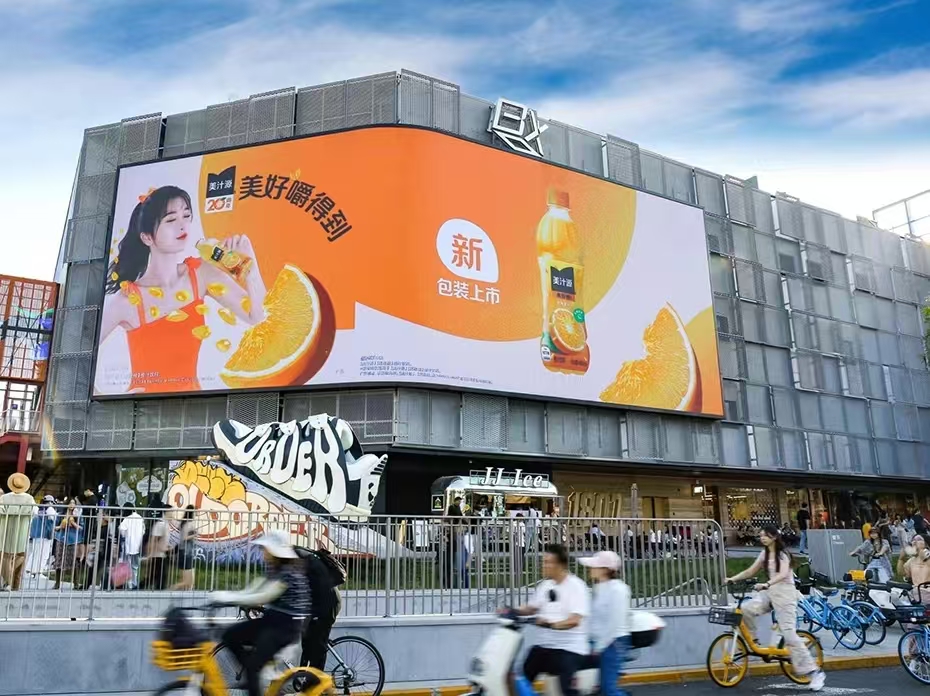
Micro in 2025 LED naked-eye 3D screen will break through the P1.0 spacing
Holographic air projection technology enters the commercial trial stage
New creative frontier:
AI generated content (AIGC) will account for 40%
Metaverse cross-screen narrative becomes standard
Sustainable challenges:
Formulate the "Outdoor 3D Screen Light Pollution Control Standard" (brightness threshold ≤8000nits)
Modular design makes the material recycling rate reach 90%
Conclusion
Naked-eye 3D display is not only a technical victory, but also an artistic awakening of commercial space. When the 3840Hz refresh rate accurately synchronizes the heartbeat, when 2 million pixels weave a shocking vision, outdoor advertising has been upgraded to a public art installation in the city. By building the iron triangle model of "precision hardware + extraordinary creativity + smart operation", the commercial plaza can not only gain 15 times the attention of traditional advertising, but also redefine the spatial value of the digital age. In the symphony of technology and art, every screen is an amplifier of the city's heartbeat, and every leap of light and shadow is writing a new epic of commercial communication.
 English
 中文
中文