How to choose the right resolution for LED indoor display in shopping malls
In digital business scenarios, LED indoor displays have become the core vehicle for information dissemination, brand display and consumer guidance in shopping malls. According to the industry report of China Commercial Display Equipment Association 2023, more than 78% of medium and high-end shopping malls have been equipped with LED display systems, but 37% of these displays have the problem of poor display effect caused by improper resolution selection. In this paper, we will analyze how to scientifically select the resolution of LED display in shopping malls from the three dimensions of technical principle, space adaptation and content demand.
First, the resolution of the core technical parameters analysis
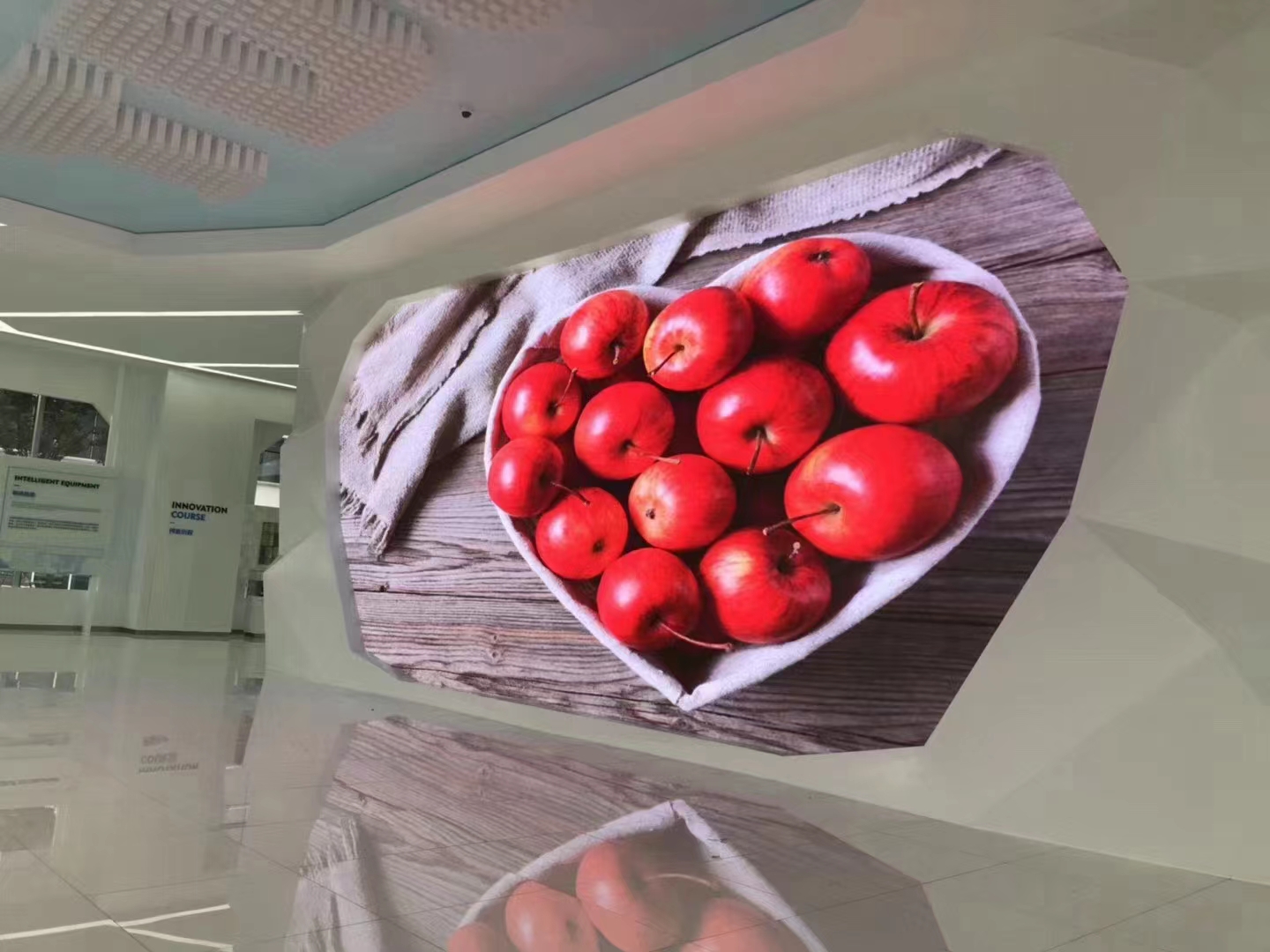
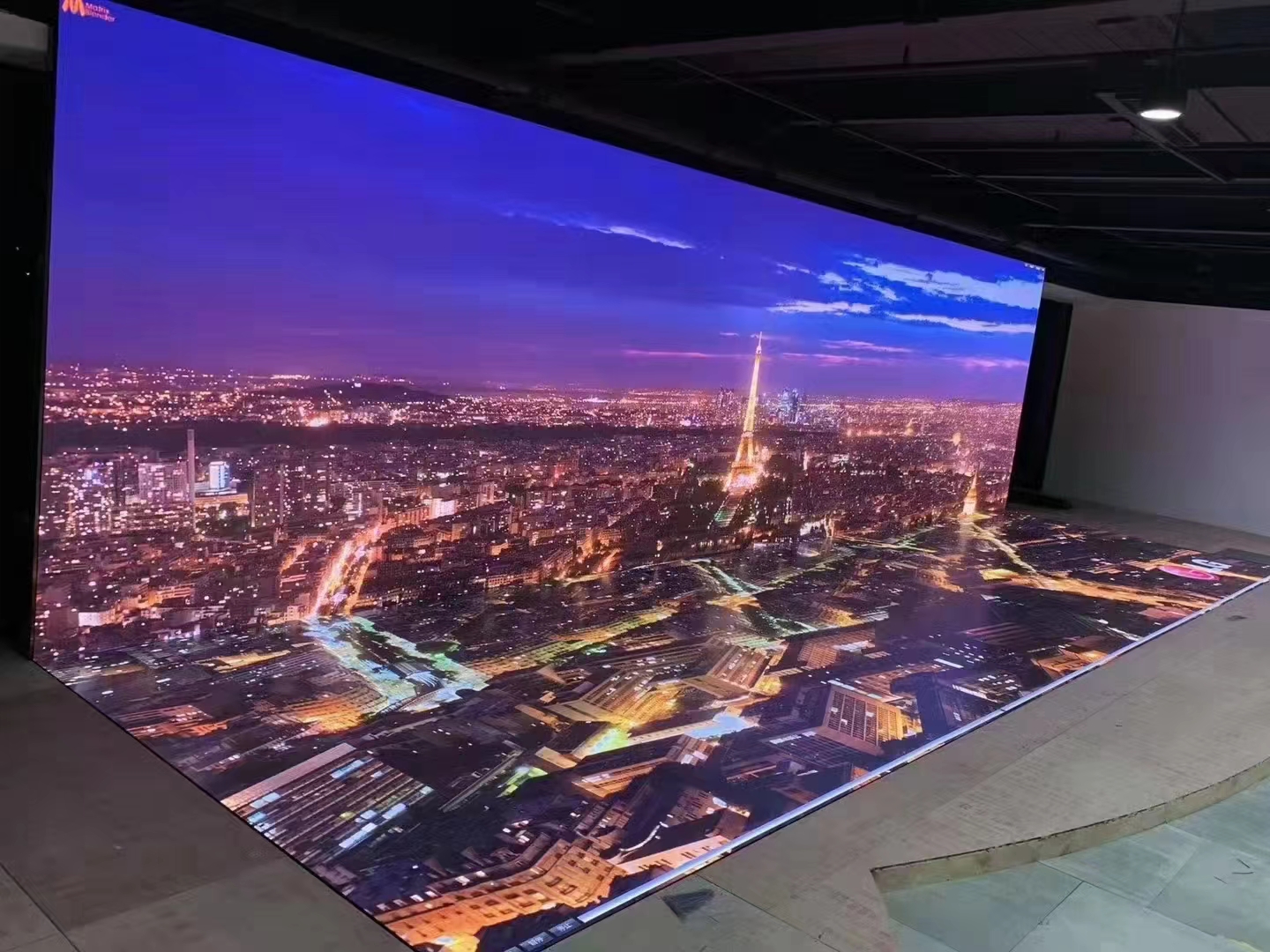
Pixel Pitch (Pixel Pitch) and resolution relationship
Pixel pitch refers to the distance between the center points of adjacent pixels, unit millimeter (mm). In the same screen size, P2.5 display (2.5mm pitch) physical resolution up to 3840 × 2160 (4K standard), while the P4 display resolution is reduced to 1920 × 1080 (FHD standard). Industry empirical formula: resolution = screen size (mm) ÷ pixel pitch (mm).
Human Eye Visual Resolution Threshold
Normal vision (1.0) at a distance of 3 meters in the angular resolution of 1.5 arc minutes, corresponding to the optimal pixel pitch formula: PP = tan (1.5') × viewing distance. For example, the PP value for 5 meters viewing distance should be 5×tan(0.025°)=5×0.000436≈2.18mm.
Matching Resolution and Signal Source
It is necessary to follow the principle of “signal source resolution ≤ display physical resolution”. If the display supports 4K (3840×2160) and the signal source is only 1080P (1920×1080), the image will be blurred due to pixel interpolation.
Spatial environment adaptation model
Viewing Distance and Resolution Correspondence Table
| Viewing distance | Recommended pixel pitch | Applicable resolution |
|----------|--------------|------------|
| 1-3 meters | P1.2-P2.0 | 4K-8K | 3-6 meters | P1.2-P2.0 | 4K-8K | 4K-8K
| 3-6 meters | P2.5-P3.0 | 2K-4K |
| 6-10 meters | P3.5-P4.0 | FHD-2K |
| 10 meters + | P4.5+ | HD |
Space Illumination Compensation Factor
In glass curtain wall areas with sufficient natural light, it is recommended to increase the resolution by 20% to compensate for light interference. For example, a P2.5 display should be used in areas where P3 is originally required.
Installation Angle Correction
Cosine correction should be applied for non-vertical installation: effective resolution = nominal resolution × cosθ (θ is the tilt angle). 30 degree tilt installation, the effective resolution will be attenuated to 86.6% of the nominal value.
Content Presentation Requirements Analysis
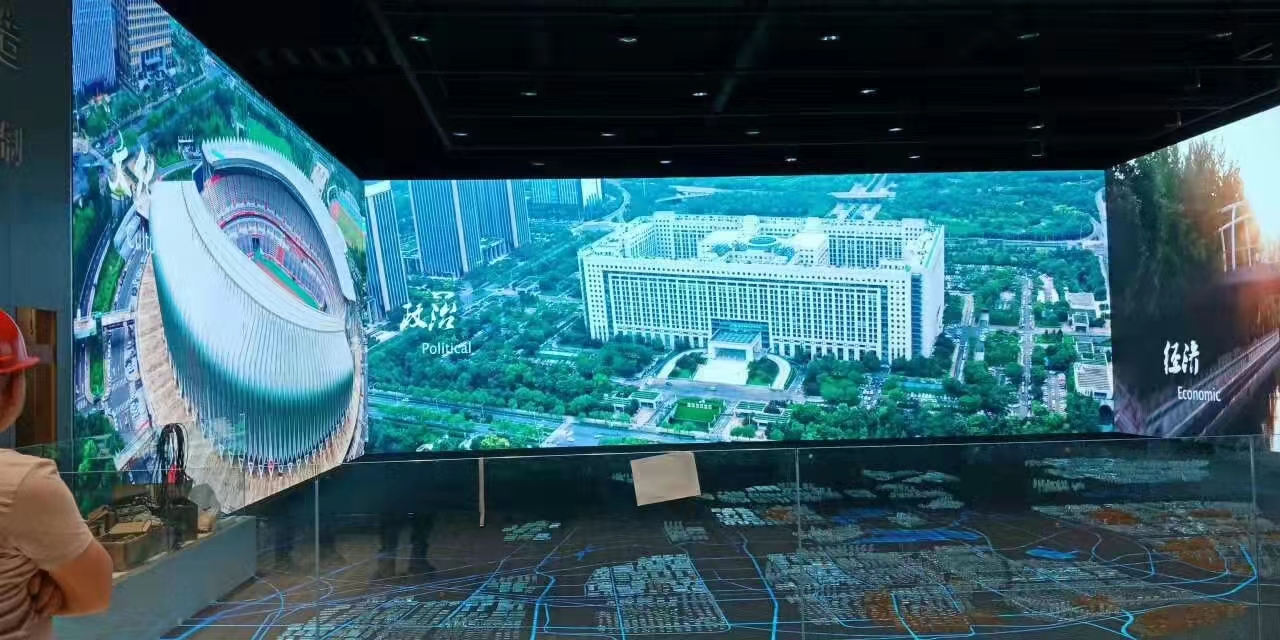
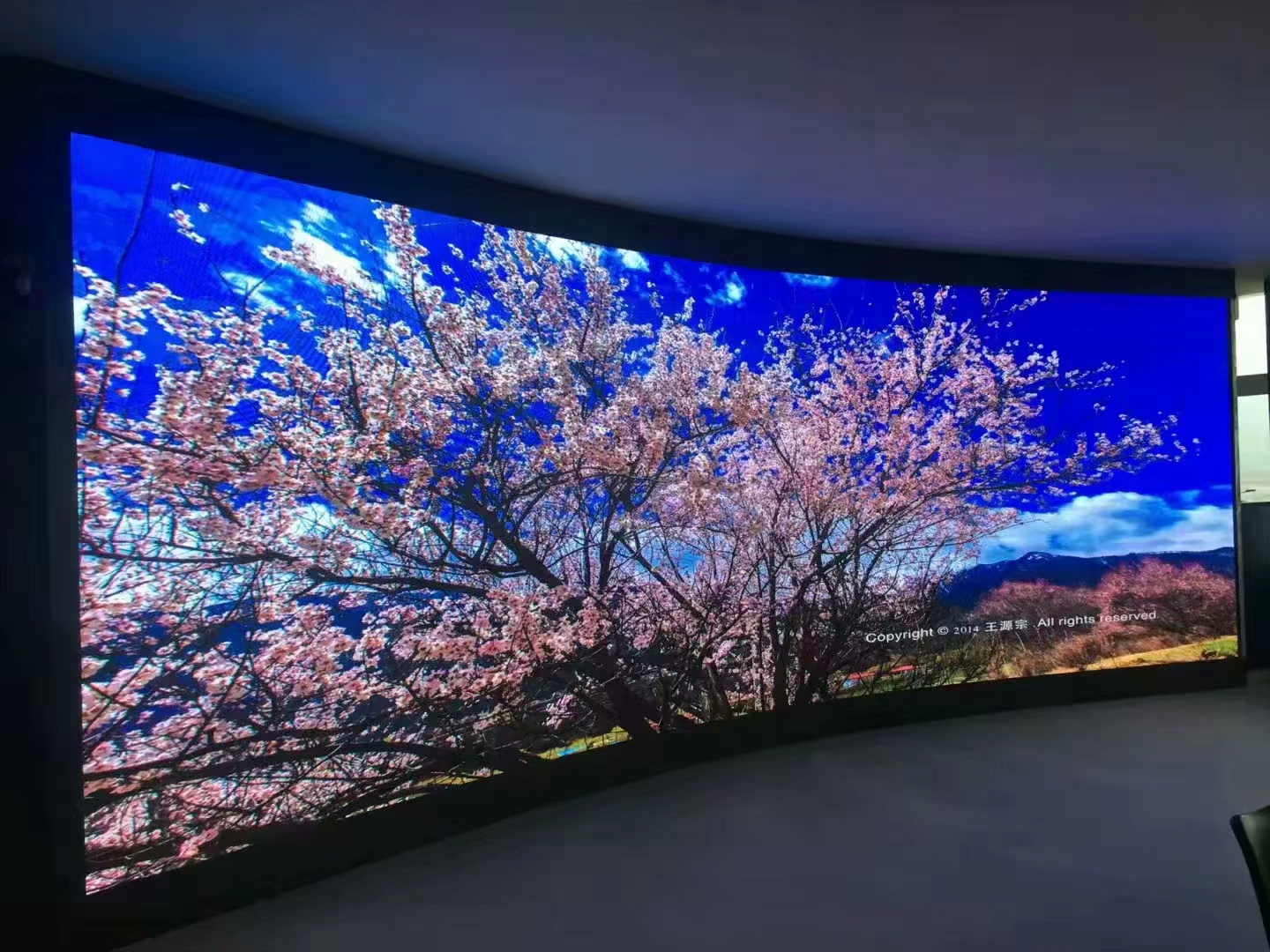
Dynamic video content
It is recommended to use progressive scan mode, the resolution should be more than 120% of the video source. If playing 4K video needs at least 4608×2592 physical resolution.
Static graphic information
Text display should ensure that the minimum character height = viewing distance/200. e.g. if viewed from 5 meters away, the height of Chinese characters should be ≥25mm, and the corresponding pixel height (in terms of P2.5 screen) should be ≥10 pixels.
Interactive Touch Scene
The pixel density of the touch area should be more than 300PPI, and the corresponding pixel pitch should be ≤0.84mm (P0.8 level), and it is recommended to use LCD+LED hybrid program for this kind of scene.
Cost-benefit balance strategy
Resolution Marginal Benefit Curve
When the pixel pitch is less than 1.5mm, the cost per unit area grows exponentially, but the recognition degree of the human eye improves less than 15%. It is recommended to use P1.8-P2.5 for the main screen in the atrium and P3-P4 for the regular area.
Modular upgrade design
Adopting standard 512×512 pixel module, it supports seamless splicing and upgrading at a later stage. Initial construction can be configured with 80% of target resolution, reserving 20% upgrade redundancy.
Energy consumption optimization model
The power consumption per unit area of 4K screen (P2.5) is about 2.3 times that of FHD screen (P4). It is recommended to adopt zoned power supply technology, and the inactive area is automatically downsampled to 1/4 resolution, which can reduce energy consumption by 35%.
V. Special Scenario Solutions
Column screen ring splicing
The curved surface needs to apply resolution compensation algorithms to increase the pixel density by 5% per 10 degrees of curvature. Cylindrical screen with a diameter of 3 meters is recommended to use P2.0 + surface correction technology.
Transparent screen and resolution balance
Under the premise of maintaining 50% light transmittance, the resolution of transparent LED screen usually decreases by 40%, which can be compensated by sub-pixel rendering technology to compensate for the 20% loss of clarity.
Digital Signage Network
When the multi-screen linkage, the master screen resolution should be an integer multiple of the slave screen (recommended 2 times relationship), such as the master screen 4K (3840 × 2160), the slave screen configuration 2K (1920 × 1080).
 English
 中文
中文