How to choose LED transparent screen in shopping malls
How to Choose LED Transparent Screens for Shopping Malls: A Professional Guide
In the digital age, LED transparent screens have become vital tools for shopping malls to attract customers and enhance brand image, thanks to their high transparency, energy efficiency, and strong visual impact. However, with numerous products on the market, how to select the right LED transparent screen for commercial spaces? This article provides systematic solutions from technical parameters, application scenarios, to brand services.
1. Core Parameters: Scientific Performance Evaluation
Resolution & Pixel Pitch
Shopping malls require high-definition displays. Prioritize pixel pitch (smaller pitch means finer details). For example, P3.9 suits mid-to-long distance viewing, while P2.5 works for premium window displays. Match installation height: Choose P4-P6 for areas above 5m, P2.5-P3.9 for spaces under 3m.Brightness & Transparency Balance
Select 1500-2500cd/㎡ brightness with 30%-70% transparency for optimal visibility and merchandise display. Advanced models now achieve 85% transparency with 4000cd/㎡ brightness through innovative lamp bead arrangements.Refresh Rate & Gray Scale
A 3840Hz+ refresh rate eliminates moiré patterns during photography, crucial for live-streamed interactions. 16bit gray scale ensures smooth color transitions for dynamic content.
2. Scenario Adaptation: Precision Matching
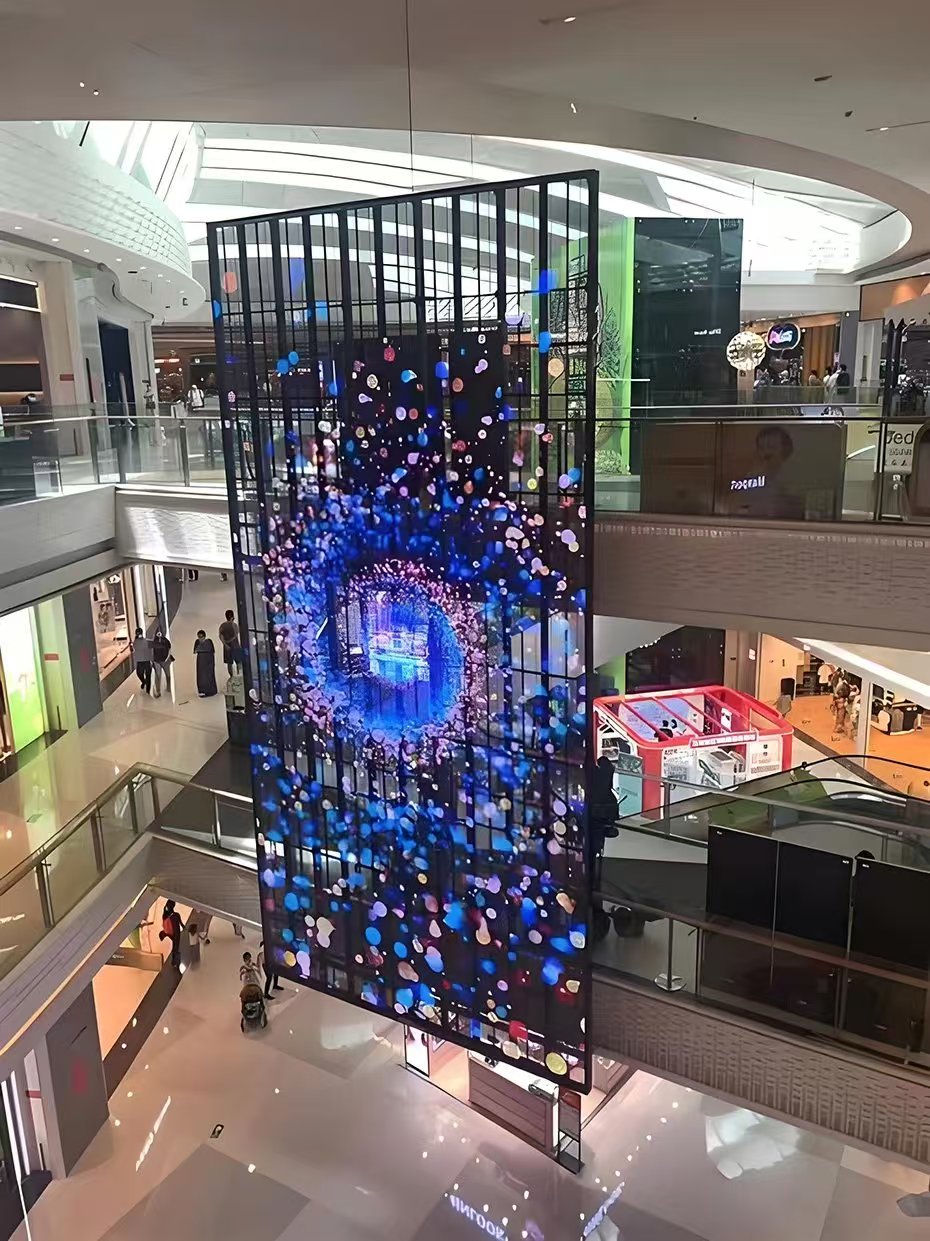
Atrium Suspension Screens
Opt for cabinet structures supporting curved installation and intelligent thermal management. Ensure single cabinet weight ≤15kg with heat dissipation systems.Window Integration Screens
Use strip-shaped transparent screens with 90% light transmittance. Modular designs (e.g., 800mm×1000mm units) enable quick maintenance and content switching.Interactive Zones
Choose models with ≤8ms response time, integrated with infrared/radar sensors. AR-enabled screens can serve as virtual fitting assistants, as seen in luxury brand flagship stores.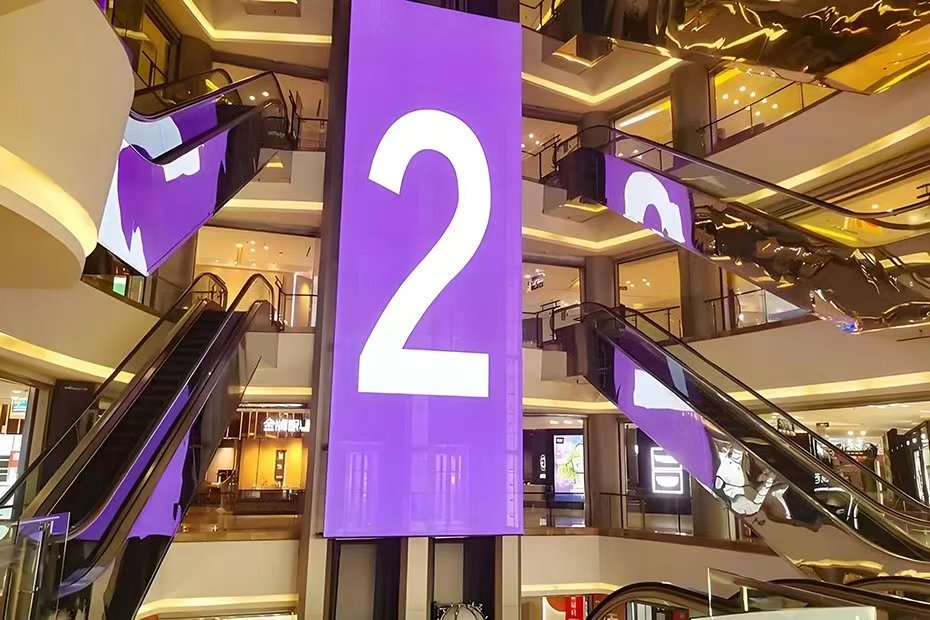
3. Brand Selection & Maintenance
Certification Standards
Prioritize ISO9001/CE/ROHS-certified brands with ≤0.0001% dead pixel rate and ≥100,000 hours MTBF.Service Network
Demand 7×24 support with 2-hour remote diagnosis and 48-hour on-site service. Comprehensive contracts should include local spare parts storage and annual brightness detection.Cost-Benefit Analysis
Evaluate total lifecycle costs: Energy consumption (≤300W/㎡ for energy-saving models), maintenance savings (30% reduction via modular design), and content management efficiency.
 English
 中文
中文