How does LED display create a stunning display?
With the growing demand for digital display, LED display screens have evolved from simple information carriers to a medium for creative expression. To create an unforgettable stunning display, it is necessary to build a complete solution system from hardware performance, content creativity, environmental adaptation to interactive experience. The following are five key strategies for creating a stunning LED visual feast:
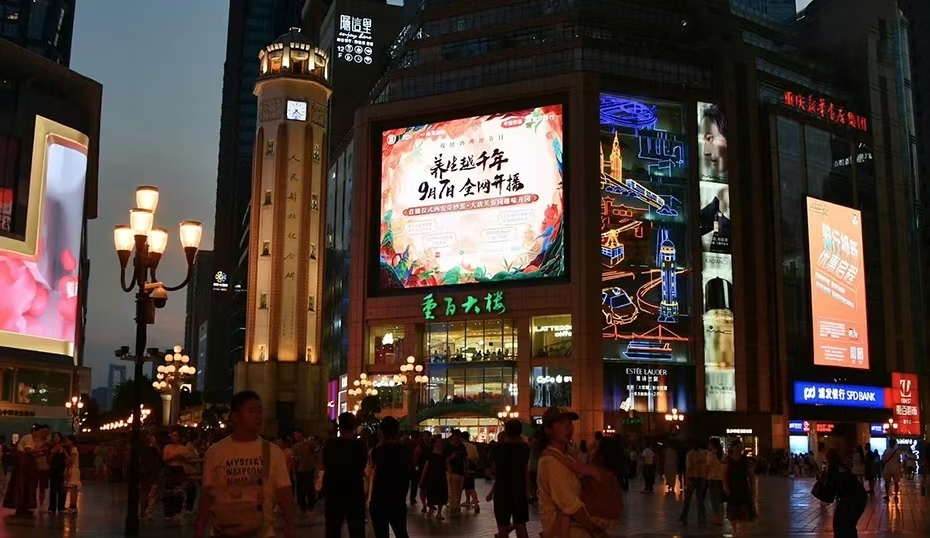
1. Accurate control of hardware selection
Scene adaptation of pixel density
Choose a micro-pitch LED screen of P1.2-P3 to create an immersive art installation. The P4-P10 pitch is suitable for large stage backgrounds. The resolution needs to be configured according to the audience's viewing distance (optimal viewing distance = dot pitch/0.3). For outdoor scenes, anti-glare modules with a brightness of more than 8000nit are preferred.
Technical breakthrough in dynamic performance
Adopting 3840Hz refresh rate and 16bit grayscale processing technology to ensure that high-speed sports pictures such as racing and fireworks are free of smear. HDR10+ technology enables dark field detail retention rate to reach 95%, and the contrast ratio exceeds 1,000,000:1.
Innovative structural design
The curved screen (2000R curvature) creates a panoramic wrapping visual effect, the transparent screen (65% transmittance) creates a virtual and real superposition window show, and the floor tile screen (IP68 protection) realizes the digital floor of human-screen interaction.
2. Multi-dimensional reconstruction of content creativity
Dynamic visual narrative system
Build a particle fluid animation of 120 frames per second, and generate dynamic backgrounds such as galaxy vortex and digital fireworks through GPU real-time rendering. Use parametric design tools to generate infinitely changing geometric graphics arrays.
Depth creation of spatial perspective
Use the UE5 engine to produce naked-eye 3D content, and achieve 5 layers of spatial depth through depth of field control. Set a parallax fence with a precision of 0.5mm at 8K resolution to create a stereoscopic visual effect without glasses.
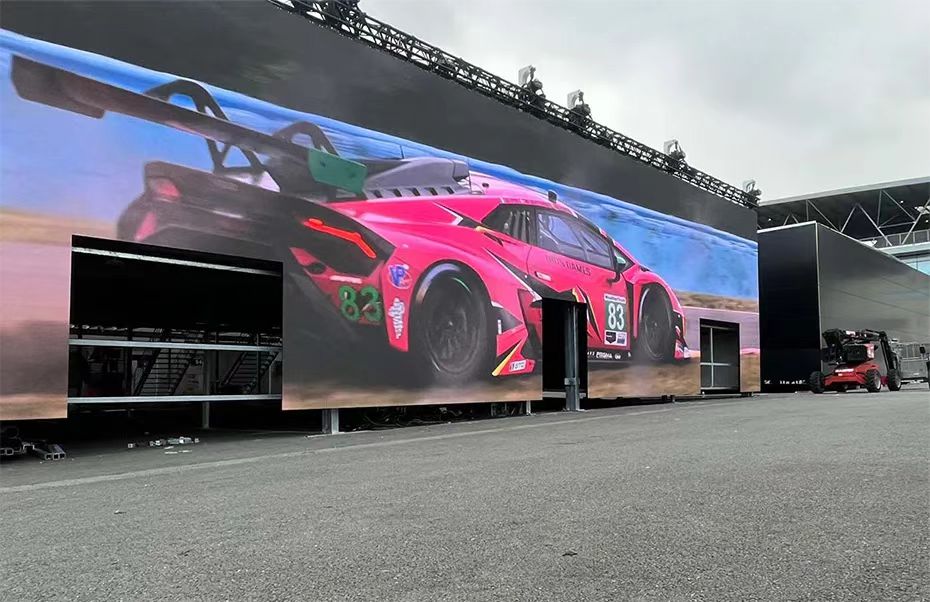
Montage technique of virtual and real fusion
Dynamically map the physical device with the LED image, such as the real-time interaction between the robotic arm and the virtual arm on the screen. Seamless splicing of multiple screens is achieved through the nDisplay system of Unreal Engine.
3. Intelligent control of environmental adaptation
Dynamic compensation of lighting conditions
Configure an ambient light sensor array to adjust the screen brightness in real time (50-8000nit adaptive). Use quantum dot technology to expand the color gamut to the Rec.2020 standard to ensure color accuracy under strong light.
Time and space synchronization of sound, light and electricity
The Art-Net protocol is used to achieve millisecond-level synchronization of each frame with DMX512 lighting and Dante audio. Build an LTC time code system to ensure that the error of multi-device coordination is less than 3ms.
Optimization algorithm for viewing angle
Apply a brightness compensation algorithm based on audience distribution to maintain color consistency of ΔE<3 within a 160° viewing angle. Configure an adjustable viewing angle lens to achieve gradual brightness adjustment within a vertical range of 30°.
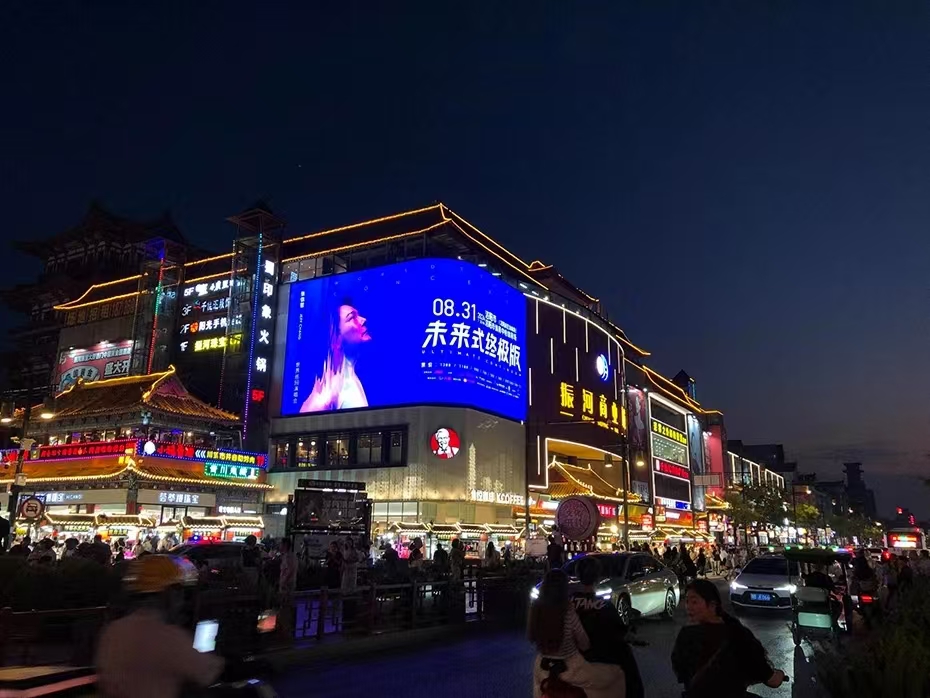
4. Perception upgrade of interactive experience
Spatial positioning interactive system
Deploy UWB centimeter-level positioning devices and combine computer vision to capture audience motion. Build real-time interactive images through the TouchDesigner platform, and control the response delay within 80ms.
Multimodal perception fusion
Integrate millimeter wave radar (detection accuracy ±2cm), thermal imaging sensor (0.1℃ sensitivity), array microphone (5m effective sound pickup) to build an environmental perception network. Use AI algorithm to analyze the audience's emotional index and dynamically adjust the content presentation.
Experience extension of cross-screen interconnection
Develop WeChat applet to realize AR interaction between mobile phones and LED screens, and use WebRTC technology for 4K video live streaming. Set up NFC contacts to achieve zero-delay content transmission between audience phones and screens.
V. Prevention system for operation and maintenance guarantee
Intelligent monitoring and early warning platform
Build an IoT-based operation and maintenance system to monitor the temperature (accuracy ±0.5℃), humidity, and voltage fluctuations of each box in real time. Use machine learning to predict faults and warn potential risk points 72 hours in advance.
Modular rapid maintenance solution
Design a magnetic quick disassembly and assembly structure, and the replacement time of a single module is compressed to 30 seconds. Configure a backup power supply module to support hot-swap uninterrupted power maintenance. Establish an automatic isolation mechanism for faulty modules to ensure that more than 95% of the display area continues to work.
Data-driven effect optimization
Analyze hot spots through passenger flow counting cameras (counting accuracy of 98%), and optimize content layout in combination with eye tracker data. Use big data to analyze the best brightness curves at different times to achieve a dynamic balance between energy efficiency and image quality.
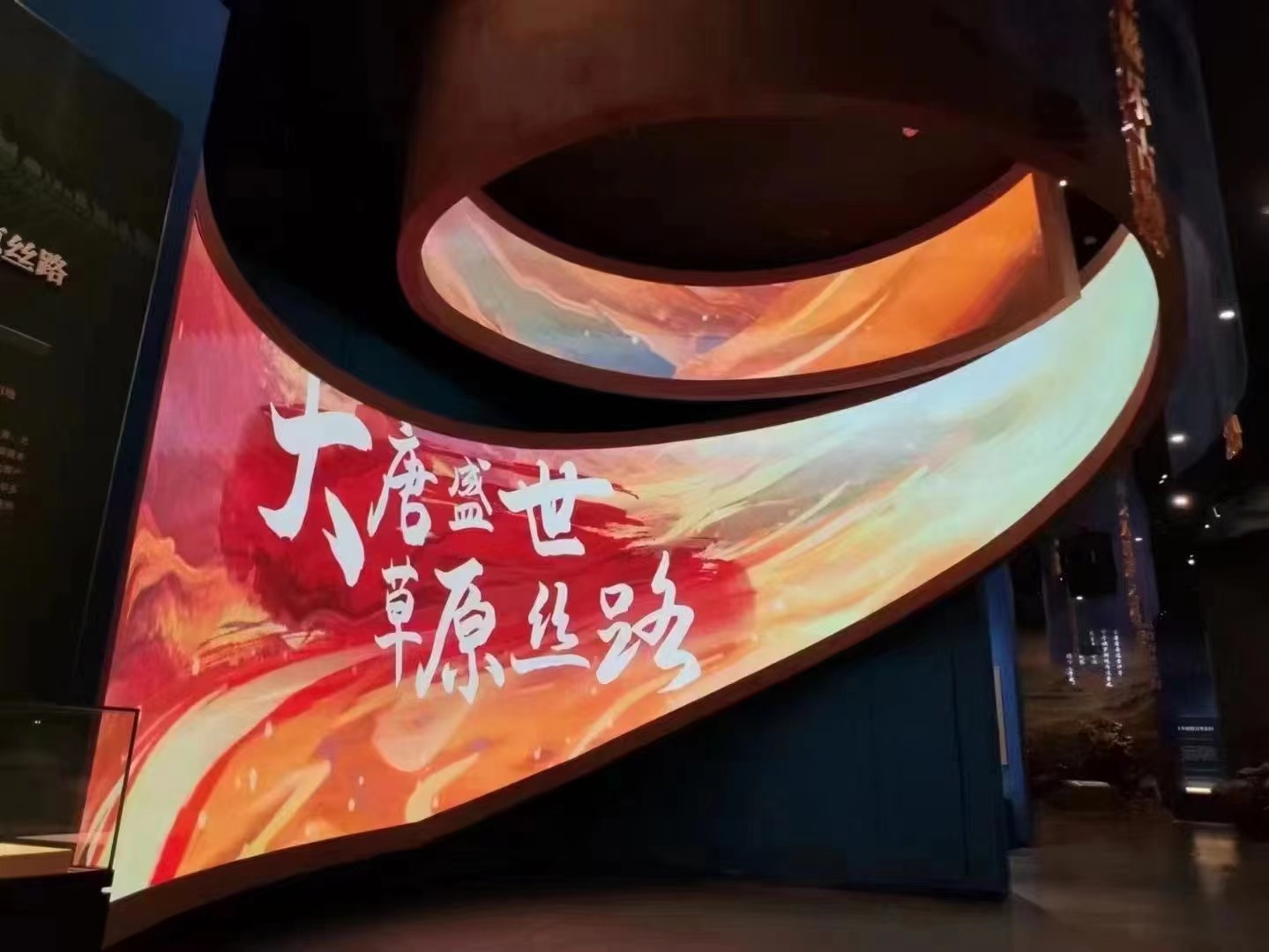
When hardware performance breaks through physical boundaries, content creativity integrates digital art, environmental adaptation realizes intelligent perception, interactive systems build emotional connections, and operation and maintenance systems ensure continuous stability, LED displays can surpass traditional display concepts and evolve into a digital art carrier with vitality. This integrated solution, with technological innovation as its backbone and artistic expression as its soul, is redefining the boundaries of visual display possibilities and creating a shocking experience that touches the heart for the audience.
 English
 中文
中文